The short answer: Mold needs moisture, and a Jacksonville house can take it in from the rain, from the air and from its own pipes and equipment. If you already see or smell mold, our page on mold inspection explains what a Florida licensed mold assessor checks; this guide is about where the water comes from.
Juniper Tide Mold Referrals is a referral service and does not inspect or repair homes. NOAA supplies the weather figures, and what the page says about mold is taken from the EPA and the Florida Department of Health, with each agency named beside its point.
Water Is the Part That Varies
The Florida Department of Health says all molds require water to grow, and calls controlling moisture the key to stopping mold growth indoors.
The food is already in the house. The department names wood and sheetrock among the building materials that can feed mold, and says even dust settled on them can be a food source.
So what causes house mold in Jacksonville comes down to how water reaches those materials. The sections below follow it from the sky, then the air, then the equipment inside.
Jacksonville Rainfall in NOAA's Normals
NOAA's U.S. Climate Normals are 30 year averages built from weather station records. For its Jacksonville station (USW00013889), the 1991 to 2020 normal is 53.40 inches of rain a year.
The same normals count 113.9 rain days a year, meaning days with 0.01 inch or more, and 76.3 days with 0.10 inch or more.
| June | 7.60 inches |
|---|---|
| July | 6.77 inches |
| August | 6.88 inches |
| September | 7.56 inches |
| June to September together | 28.81 inches, more than half the year's 53.40 (our sum of NOAA's monthly normals) |
| November, the driest month | 2.00 inches |
Four Wet Months
June through September is when the water arrives. Each of those months normally brings more than three times November's rain.
From Rain to an Indoor Leak
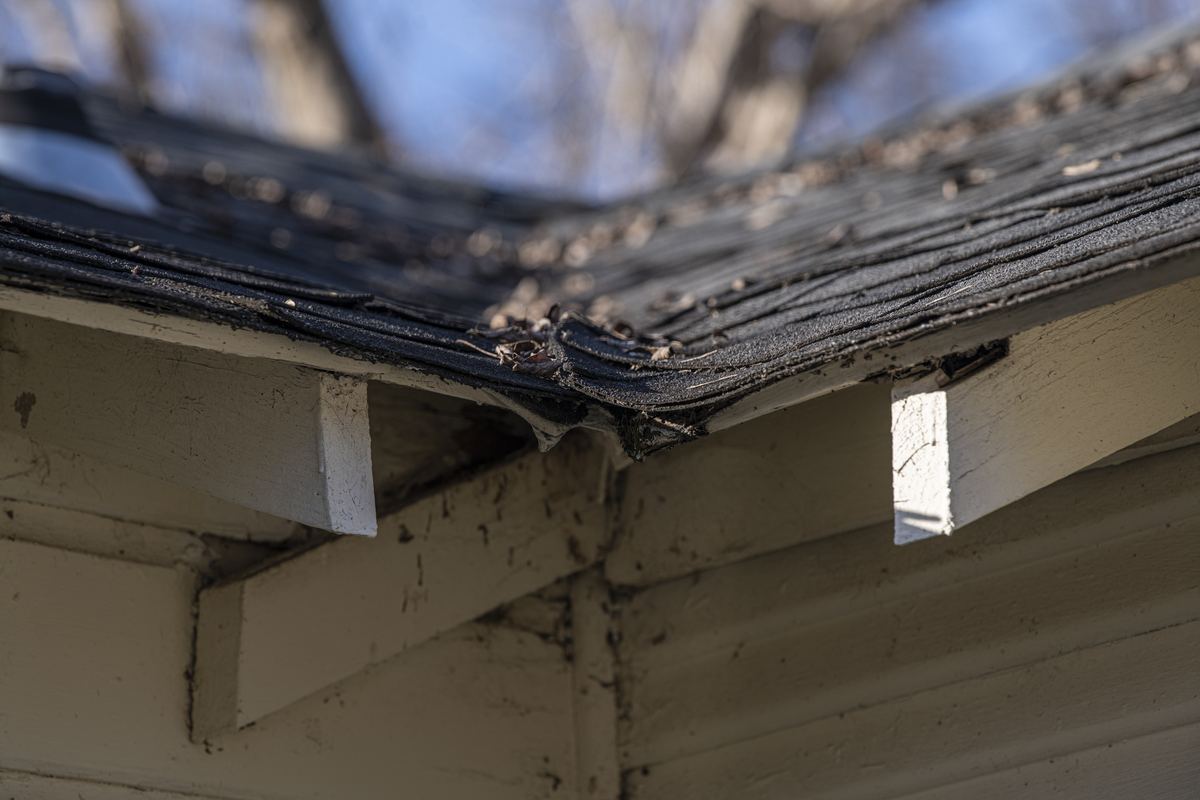
Rain turns into an indoor problem when it gets past the outside of the building. Among its sources of indoor moisture, the health department lists leaks that come in from outside through the roof, walls or floors.
The EPA's mold course adds landscaping, gutters and down spouts that direct water into or under a building to its list of common moisture problems.
Roof Leaks
The course puts leaking roofs at the top of that list and names roof materials above ceiling tiles as a place where hidden mold can grow.
It also warns that a roof left leaking for a long time lets molds feed on the wet wood until floors and walls weaken.
How Much Moisture the Summer Air Carries
Rain is only one source. The health department also lists warm, moist air from outdoors, and condensation, among the ways moisture gets into a home.
The National Weather Service defines dew point as the temperature air must be cooled to in order to reach saturation. A higher dew point, it says, means more moisture in the air.
NOAA's hourly normals for the Jacksonville station put the dew point at 71 degrees Fahrenheit or higher at every hour of a normal July and August day. In January the same hourly normals run from 41.5 to 48.1 degrees.
These normals give dew point, not relative humidity, so dew point is the figure used here.
Humid Air on a Cold Surface
The EPA's course explains condensation with a cold bottle taken out of the refrigerator on a hot day: when warm, humid air touches a cold surface, condensation may form.
The health department traces condensation to two things: humidity indoors that runs too high, or surfaces that are too cold. In the EPA's words, condensation can be a sign of high humidity.
Where Condensation Collects
The course says mold is often found on walls in cold corners behind furniture, where condensation forms. It lists leaking or condensing water pipes, especially inside wall cavities, as a common moisture problem.
One of its photos shows condensation on an air conditioning duct with no insulation, which leads to the next source.
The Air Conditioner as a Source of Water
According to the EPA's course, one job of a heating, ventilation and air conditioning system is to take moisture out of the air before that air goes through the building. The water it removes has to drain away.
When it does not, the system itself becomes a water source. The health department counts overflow from air conditioner drain pans as indoor flooding, and the EPA names poorly draining condensate drain pans inside air handling units among the places hidden mold grows.
The course gives one more case: if the system is turned off during or soon after cleaning that uses a lot of water, humidity may rise greatly and moisture or mold problems may develop.
Mold Inside the System
The EPA's Brief Guide to Mold, Moisture and Your Home says not to run a system you know or suspect is contaminated with mold, since it could carry mold through the whole building.
The health department admits the cost: in hot and humid weather, turning off the air conditioner would leave most Florida buildings very uncomfortable. It still says the ideal is to shut the system down while cleaning or mold removal goes on.
Plumbing Leaks You Cannot See
The health department lists indoor plumbing leaks or broken water pipes as a moisture source, along with overflow from sinks, tubs and toilets.
Many of these leaks stay hidden. The EPA's Brief Guide names areas inside walls around leaking or condensing pipes, the back of drywall and the space beneath carpet and padding as places where mold can hide.
Clues to a Hidden Leak
The EPA gives two reasons to suspect hidden mold: a moldy smell with no source you can see, or known water damage in a home where people are reporting health problems.
The health department says to look for water leaks, standing water, water stains and condensation. If mold returns soon after cleaning or spreads, the department says, there may be an underlying problem like a water leak.
Everyday Moisture in the Health Department's List
Some of the sources the department names come from ordinary living rather than a failure:
- Steam from showers or cooking that is not vented well
- Humidifier use
- Drying clothes indoors, or a clothes dryer not vented outdoors, electric dryers included
- Overwatered house plants
- Outdoor sprinkler spray hitting the walls
- Moisture from our bodies: sweat, wet hair on pillows, breath
How the House Itself Plays a Part
The EPA's course says a building must be designed for its climate, site and use, and built as designed, or it may have moisture control problems.
It links some moisture problems to building practices since the 1970s that produced tightly sealed buildings, some of which lack adequate ventilation. It also says delayed or insufficient maintenance can lead to moisture problems.
Our guide to mold in older Jacksonville homes looks at the age of the city's housing and the weak points that come with it.
This site takes requests from homeowners across Jacksonville. The coast has its own page, mold inspection in Jacksonville Beach, with rain normals from that town's station.
From Causes to Prevention
The EPA puts its advice in a single line: the key to mold control is moisture control. That makes the causes above, the roof, the air conditioner, the plumbing and the air indoors, the same places to watch.
A routine for each of them, from indoor humidity to hurricane season, is in our guide on how to prevent mold in a Florida home.
Mold Causes in Jacksonville: Questions Readers Ask
What causes house mold in Jacksonville when there is no leak at all?
Moisture in the air can be enough. The EPA's mold course says humidity or dampness in the air can sometimes supply enough moisture for mold growth. The Florida Department of Health also lists condensation, warm, moist air from outdoors and steam from showers and cooking among its sources.
Is summer the riskier time of year here?
NOAA's normals for the Jacksonville station show the most rain from June through September and the highest dew points in July and August. The health department does not rank the seasons; it says that given enough moisture or high humidity, molds can grow almost anywhere.
Who works out where the water is coming from?
Under Florida law, a mold assessment is done by a mold assessor and includes physical sampling and a detailed evaluation of the building's history and inspection data. Its purpose, in the statute's terms, is an initial hypothesis about the origin, identity, location and extent of mold growth larger than 10 square feet. Mold assessors, like mold remediators, are licensed by the Florida Department of Business and Professional Regulation. The mold inspection page explains that visit in more detail.
Sources
- NOAA National Centers for Environmental Information, U.S. Climate Normals. https://www.ncei.noaa.gov/products/land-based-station/us-climate-normals. Read 2026-11-23.
- NOAA NCEI, 1991 to 2020 annual and seasonal normals, station USW00013889 (Jacksonville, FL). https://www.ncei.noaa.gov/access/services/data/v1?dataset=normals-annualseasonal-1991-2020&stations=USW00013889&format=json. Read 2026-11-23.
- NOAA NCEI, 1991 to 2020 monthly normals, station USW00013889 (Jacksonville, FL). https://www.ncei.noaa.gov/access/services/data/v1?dataset=normals-monthly-1991-2020&stations=USW00013889&format=json. Read 2026-11-23.
- NOAA NCEI, 1991 to 2020 hourly normals, station USW00013889 (Jacksonville, FL). https://www.ncei.noaa.gov/data/normals-hourly/1991-2020/access/USW00013889.csv. Read 2026-11-23.
- National Weather Service, Glossary: Dew Point. https://forecast.weather.gov/glossary.php?word=dew%20point. Read 2026-11-23.
- Florida Department of Health, Indoor Mold and Your Health. https://www.floridahealth.gov/community-environmental-public-health/environmental-public-health/air-quality/mold/. Read 2026-11-23.
- U.S. Environmental Protection Agency, A Brief Guide to Mold, Moisture and Your Home. https://www.epa.gov/mold/brief-guide-mold-moisture-and-your-home. Read 2026-11-23.
- U.S. Environmental Protection Agency, Mold Course Chapter 2. https://www.epa.gov/mold/mold-course-chapter-2. Read 2026-11-23.
- Florida Statutes, section 468.8411, Definitions. https://www.leg.state.fl.us/statutes/index.cfm?App_mode=Display_Statute&URL=0400-0499/0468/Sections/0468.8411.html. Read 2026-11-23.
- Florida Department of Business and Professional Regulation, Mold-Related Services. https://www2.myfloridalicense.com/mold-related-services/. Read 2026-11-23.
The service
Mold inspection: what a Florida licensed mold assessor looks at when the source of the water is unclear.
Other guides
Where mold grows in a house, room by room, and the first days after water damage.
How to ask
Send a request using the four field form. It may go to a company whose mold assessor holds a Florida license, and that company may pay us for the introduction.