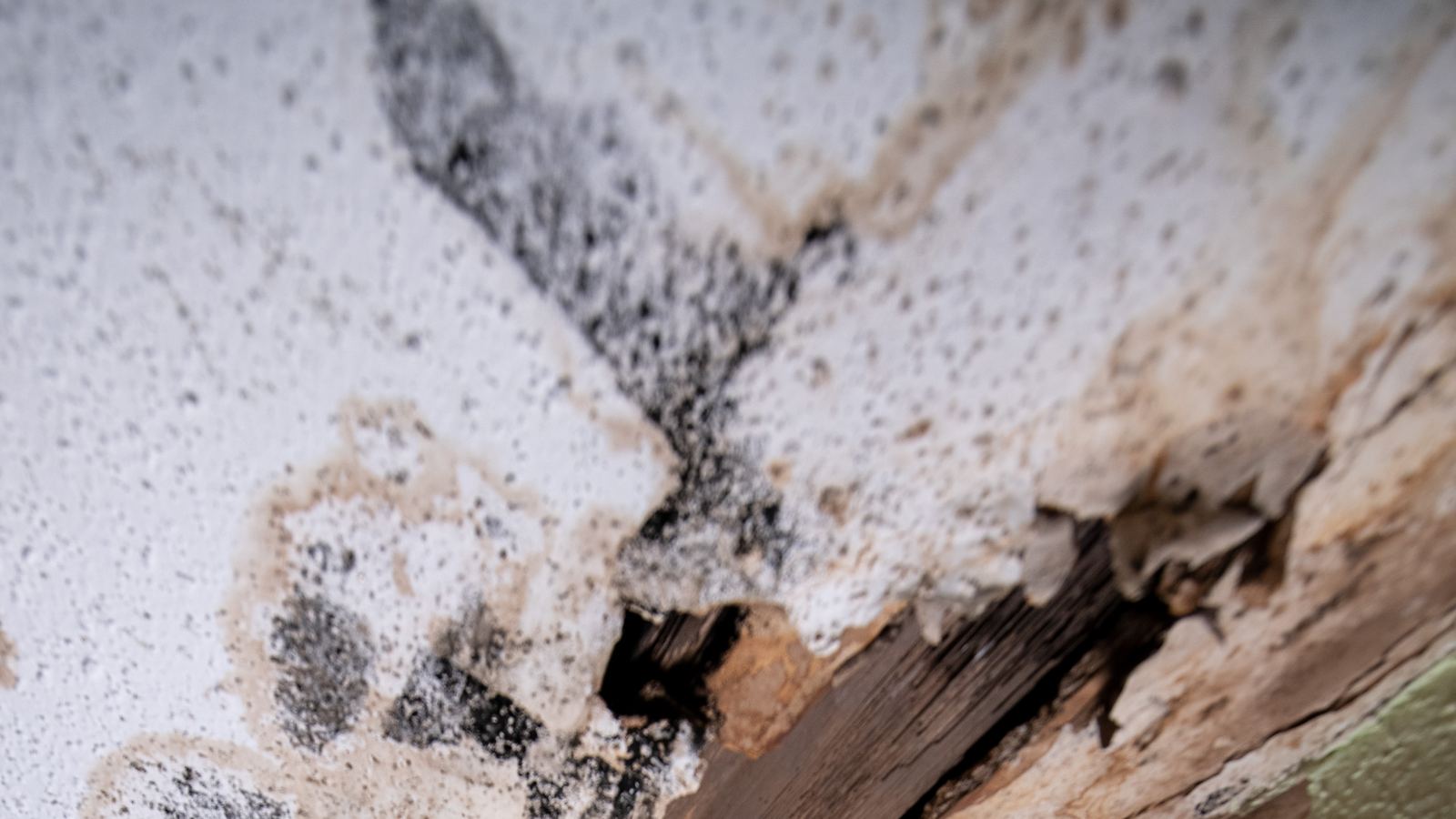
Mold inspection in plain words
A mold inspection answers two questions about a home: is mold growing indoors, and where is the moisture coming from that lets it grow. The second answer matters more, because the growth returns if the water does.
Florida law calls this work a mold assessment. Section 468.8411 describes it as a process that draws on "a building history and inspection" and on physical sampling.
The goal named in that statute is a first theory of where the growth began, what it is, where it sits and how far it has spread.
Mold testing is often taken to mean the whole visit, but it is only the sampling part, and a visit can end without a single sample.
| Legal name | Mold assessment (Florida Statutes 468.8411) |
|---|---|
| Who does it | A mold assessor: any person who performs or directly supervises a mold assessment |
| What it draws on | Building history, inspection, physical sampling |
| State agency | Florida Department of Business and Professional Regulation (DBPR) |
The four stages of a visit

1. Hear the water story
If a company takes your request, its assessor may start with the home's history: leaks, repairs, stains and any flooding. Florida law makes that history part of the assessment.

2. Search and measure
The assessor may look for growth in plain view and in hidden spots such as ductwork and wall cavities. A meter can show which materials are still damp.

3. Sample with a purpose
Where looking cannot settle a question, the assessor may take air, surface, bulk or water samples. Each one should answer a question named in advance.

4. Explain the findings
Florida law frames the result as a first theory of where the mold began and how far it reaches. Ask to be walked through every lab result.
Mold testing: the health department's view
"The Florida Department of Health does not recommend mold testing or sampling to see if you have a mold problem, or to see what kind of mold might be growing." (Florida Department of Health, Mold)
The department gives its reasons on the same page. Indoor growth "can usually be seen or smelled," and there are no health or exposure based standards to judge a sampling result against.
EPA's page on mold testing adds that no EPA or other federal limits exist for mold or mold spores. A lab number cannot show that a home passes or fails a federal standard.
When samples can be worth it
In its guide for schools and commercial buildings, EPA says sampling may be considered in specific instances:
- a legal dispute is involved
- nobody can tell where the mold is coming from
- health concerns are a problem
Surface samples may also show whether an area was adequately cleaned. The same guide says sampling may help tell mold apart from soot or dirt, and may identify some of the species present.
A sample should answer a question
EPA advises a sampling plan built on "a confirmable theory regarding suspected mold sources and routes of exposure." In its words: "Figure out what you think is happening and how to prove or disprove it before you sample."
When too few samples can be taken to answer the question, EPA says "it would be preferable not to sample."
What happens during the visit
The parts below follow the order the law itself names: the building's history first, then the inspection, then sampling where it is useful.
Questions about the home's water
EPA sums up the reason for these questions in one line: "The key to mold control is moisture control."
The Florida Department of Health lists where that moisture tends to come from, including:
- roof, wall or floor leaks from outside
- plumbing leaks or broken pipes
- overflow from sinks, tubs, toilets or air conditioner drain pans
- condensation from indoor humidity that is too high
- kitchen and bathroom steam that is not vented
Past repairs, old stains and any flooding are all part of that history.
The visual check
Mold can look "cottony, velvety, rough, or leathery" according to the Florida Department of Health, in colors from white and gray to black, yellow or green. It may appear as a stain or a fuzzy patch on walls, ceilings, furniture, or anything made of wood or paper.
The same page points to air conditioning equipment: the evaporator coils, liner surfaces, drain pans and drain lines.
Out of sight
EPA's brief guide names hidden spots such as inside ductwork, behind furniture where condensation forms, inside walls around leaking pipes, and in roof materials above ceiling tiles.
EPA says opening these places calls for caution, because it can disturb mold that is growing out of sight.
Moisture readings
A moisture meter has a thin probe pushed into a material or pressed against its surface, EPA explains, and it works on carpet, wallboard, wood, brick and concrete.
A humidity meter reads the air instead. EPA adds that moisture meters can track wet materials as they dry.
Samples, when there is a reason
EPA lists four kinds of sample:
- air
- surface
- bulk, meaning chunks of carpet, insulation or wallboard
- water from condensate drain pans or cooling towers
An air sample shows only what was in the air at the moment it was taken. EPA compares it to a snapshot.
The lab report
EPA says lab work should follow methods recommended by bodies such as the American Industrial Hygiene Association. It cautions: "For someone without experience, sampling results will be difficult to interpret."
So ask the assessor to go through each result with you and say what it means for your home.
When to ask for a mold inspection
The Florida Department of Health says that when the moldy area is small, "in most cases, you can handle the job yourself."
For a lot of water damage or a larger area, it points to EPA's guide for larger jobs. EPA says that if you believe mold may be hidden, consider hiring an experienced professional.
Signs worth following up
- an earthy or musty smell with no mold in view
- water stains, standing water or condensation that keeps coming back
- a past leak behind a wall or under a floor
- standing water around the air conditioner or its drain pan
For trouble that began with a leak, a storm or a flood, see the page on mold inspection after water damage. If your concern is the air in the house rather than a spot you can point to, read indoor air quality testing.
Who may do this work, and the license
DBPR "is responsible for licensing and regulating mold assessors and mold remediators."
Section 468.8419 says a person may not perform or offer a mold assessment, or use the title "mold assessor," without meeting the licensing law.
What a license takes
Under section 468.8413, an applicant must pass the required examination, be of good moral character, and meet one of two paths:
- a two year associate of arts degree or equivalent with at least 30 semester hours in microbiology, engineering, architecture, industrial hygiene, occupational safety or a related field of science from an accredited institution, plus at least 1 year of documented field experience in microbial sampling or investigations
- a high school diploma or equivalent plus at least 4 years of that field experience
Applicants also submit fingerprints for a state and national criminal history check.
Limits on the assessor
Section 468.8419 says an assessor may not perform or offer mold remediation on a building where the assessor, or the assessor's company, did the assessment in the past 12 months. A certified Division I contractor is the stated exception.
The same section bars an assessor from inspecting for a fee any property in which the assessor or the company has a financial or transfer interest, and from accepting any reward from a mold remediator in return for sending business that remediator's way.
Looking up a license
The DBPR licensee search lets anyone search by name, license number, city or county, or license type. If a company contacts you, ask for the assessor's full name and look it up before the visit.
The two license types are laid out in more depth in our guide to Florida mold license rules.
If the inspection finds mold
The Florida Department of Health says "All indoor mold growth should be removed promptly," whatever the type.
EPA adds the part that is easy to skip: "If there is mold growth in your home, you must clean up the mold and fix the water problem." Cleaning without fixing the water most likely brings the mold back.
Removal is a separate job with its own license. The mold remediation and removal page covers who may do it and how it is done.
Where we take requests
We take requests through this site for homes in the two places on our areas list. If a company takes a request, it sets its own schedule and fee.
Find your city on the areas we serve page, or go back to the home page for the full picture.
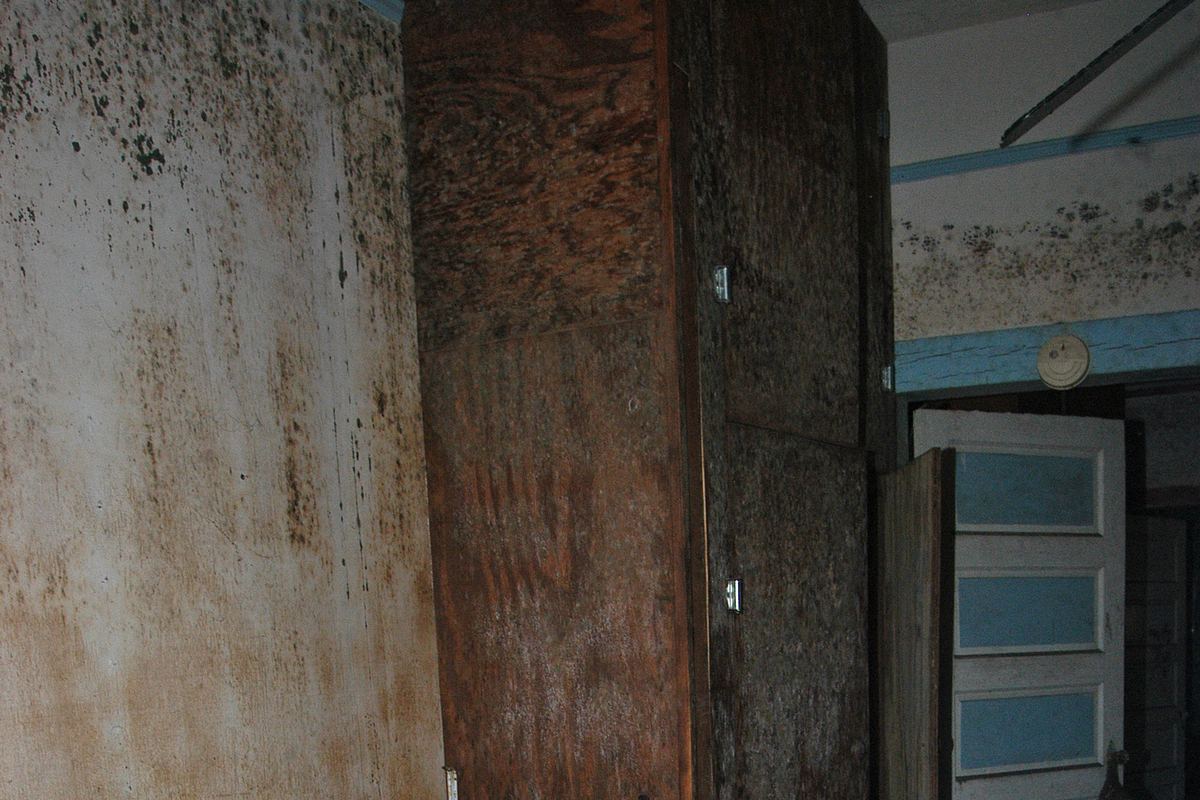
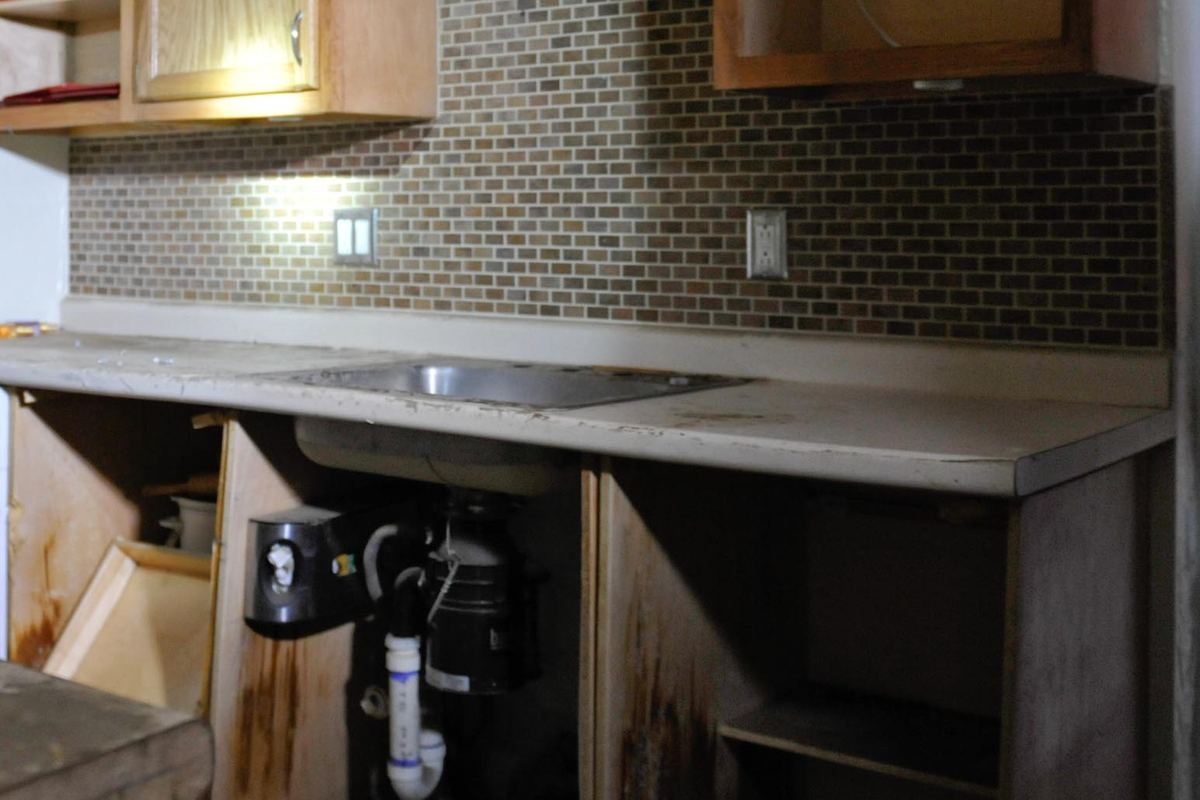
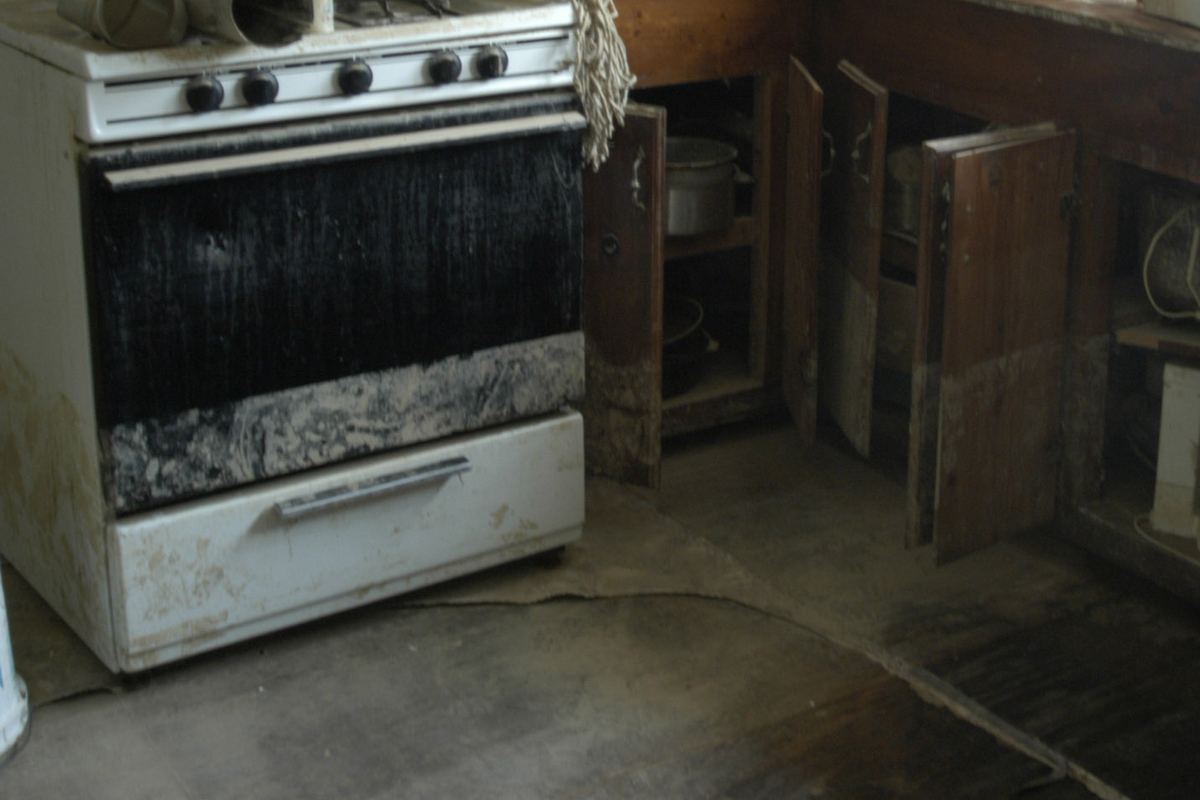
What This Work Looks Like
Public domain photos of other homes, shown to illustrate the work. They are not jobs arranged through this site.
Common Questions Before a Visit
How much does a mold inspection cost in Florida?
We do not set or publish prices; if a company contacts you, it quotes its own fee, and that figure is worth getting in writing before the visit. Samples are a large part of what moves the price: the Florida Department of Health says air sampling "can be expensive," and EPA lists "costs for unneeded or inappropriate samples" among the pitfalls when inexperienced people do the sampling. Our guide to mold inspection cost goes through what changes the bill.
How do I choose a mold inspector?
We do not rank or rate companies. Start with the license: look up the assessor's name on the DBPR licensee search. Then ask what the visit includes, which samples are planned and why, and what the written report will cover.
Will the health department check my home for mold at no charge?
The Florida Department of Health says it does not provide mold testing. It does say it can help you identify mold problems and advise you on investigation techniques and cleanup methods. Its page gives its Radon and Indoor Air Program number, 800-543-8279, for questions.
What does a home visit look at?
The steps described above: the water history, a visual check that includes hidden spots and the air conditioning equipment, moisture readings, and samples only where they answer a question. If a company contacts you, ask which of these its visit covers.
How soon can someone come out?
We cannot promise a time, because we do not schedule visits. If a company contacts you, it decides its own schedule, so ask when it can come. If water is still coming in, EPA's guide says to "Fix plumbing leaks and other water problems as soon as possible"; the page on mold inspection after water damage covers the first days.
Sources
- Mold, a Florida Department of Health page. https://www.floridahealth.gov/community-environmental-public-health/environmental-public-health/air-quality/mold/. Read 2026-11-22.
- A Brief Guide to Mold, Moisture, and Your Home (EPA 402-K-02-003), U.S. Environmental Protection Agency. https://www.epa.gov/mold/brief-guide-mold-moisture-and-your-home. Read 2026-11-22.
- Mold Testing or Sampling, U.S. Environmental Protection Agency. https://www.epa.gov/mold/mold-testing-or-sampling. Read 2026-11-22.
- Mold Remediation in Schools and Commercial Buildings, chapter 3, U.S. Environmental Protection Agency. https://www.epa.gov/mold/mold-remediation-schools-and-commercial-buildings-guide-chapter-3. Read 2026-11-22.
- Mold-Related Services, Florida Department of Business and Professional Regulation. https://www2.myfloridalicense.com/mold-related-services/. Read 2026-11-22.
- Licensee search, Florida Department of Business and Professional Regulation online services. https://www.myfloridalicense.com/portalsearches/VerifyLicensee. Read 2026-11-22.
- Section 468.8411, Florida Statutes: definitions for mold-related services. https://www.leg.state.fl.us/statutes/index.cfm?App_mode=Display_Statute&URL=0400-0499/0468/Sections/0468.8411.html. Read 2026-11-22.
- Section 468.8413, Florida Statutes: examinations. https://www.leg.state.fl.us/statutes/index.cfm?App_mode=Display_Statute&URL=0400-0499/0468/Sections/0468.8413.html. Read 2026-11-22.
- Section 468.8419, Florida Statutes: prohibitions and penalties. https://www.leg.state.fl.us/statutes/index.cfm?App_mode=Display_Statute&URL=0400-0499/0468/Sections/0468.8419.html. Read 2026-11-22.
Where we take requests
Jacksonville and Jacksonville Beach. See all areas.
Related pages
Mold remediation and removal once mold is confirmed. Mold inspection after water damage when a leak or flood started it. Indoor air quality testing for concerns about the air.
Read first
What goes into an inspection quote and why prices differ. Florida mold license types and how to look one up.
Send a Request
Fill in the form and we may pass it to a company whose mold assessor holds a Florida license. That company may contact you, and it may pay us for the introduction.