The short answer: In its Homeowners' Insurance Toolkit, the Florida Department of Financial Services writes that mold resulting from a covered peril is typically covered, with an amount that can be limited, and that some insurers exclude mold claims entirely. Your own policy and your insurer decide for your home; this site takes requests for a mold inspection or a cleanup, never for a claim.
Juniper Tide Mold Referrals is a referral service. It is not an insurer, an insurance agent or an adjuster, and nothing on this page is insurance advice.
Every coverage statement below is quoted or closely paraphrased from a named government source. The sources are listed at the end of the page with the date each was read.
Does homeowners insurance cover mold? The state's own wording
The toolkit is the Department of Financial Services' consumer guide to home insurance, revised in March 2024.
Its section on mold opens: "Typically, mold that results from a covered peril is covered under your homeowners' policy, although the amount can be limited."
The same section ends: "Other insurance companies exclude coverage for mold-related claims altogether." Between those two lines sit the state's example of a covered peril and its note on limits, both covered further down.
Perils and policy forms
The toolkit lists perils a home policy may include, among them fire or lightning, windstorm or hail, and the "Accidental Discharge or Overflow of Water or Steam".
It describes the Special Form (HO-3) as "the most popular and most comprehensive coverage form" and says it "covers the home for all causes of loss not specifically excluded."
Why two Florida policies can answer differently
The toolkit states: "Specific coverage under homeowners' insurance policies will vary from company to company."
It also says the time to learn what a policy does not cover "is not when you have a claim." That is the state's point, and the reason this guide quotes sources instead of answering for any one home.
Sudden water versus a slow leak
Two state guides separate water that escapes all at once from water that leaks for a long time. Both leave the final word to the policy.
The state's example of a covered peril
Right after its first mold sentence, the toolkit gives this example: "a sudden and accidental discharge of water from a burst pipe."
Florida's Insurance Consumer Advocate makes a similar point in Flood Insurance Myths and Facts. It says water damage, "unlike flood damage, is typically covered by your homeowners policy".
That guide's examples include a water heater that unexpectedly explodes and a hurricane that drops a tree onto a roof so that water flows into the home.
Leaks left unrepaired
The same guide adds a note on water damage: a homeowners policy "may specifically exclude coverage for some water damage, such as damage caused by a faulty toilet or continuous leaking of plumbing and pipes that have not been repaired."
It says water backing up from an outside sewer or drain "will typically not be covered" and closes with: "Review your policy to determine if it includes specific water-related exclusions."
Where the state guides stop
Neither guide says how many days or weeks turn a leak into a continuous one. Neither says how mold that follows such a leak is treated.
Those answers sit in the wording of each policy, which is why the guides send the reader back to it.
Flood water is a separate policy
The toolkit says: "Most homeowners' policies exclude flood damage (rising water)." It names two places to buy flood coverage, the National Flood Insurance Program (NFIP) and private insurers.
It adds that flood policies from private insurers "must provide at least the coverage included in policies issued by the NFIP."
How the state guide defines a flood
The Myths and Facts guide calls a flood "a tremendous overflow of water that submerges dry land." It also counts water covering two or more properties in a residential area that is normally dry.
The mold rules in federal flood policies are different from the homeowners wording above, and they follow in FEMA's own words.
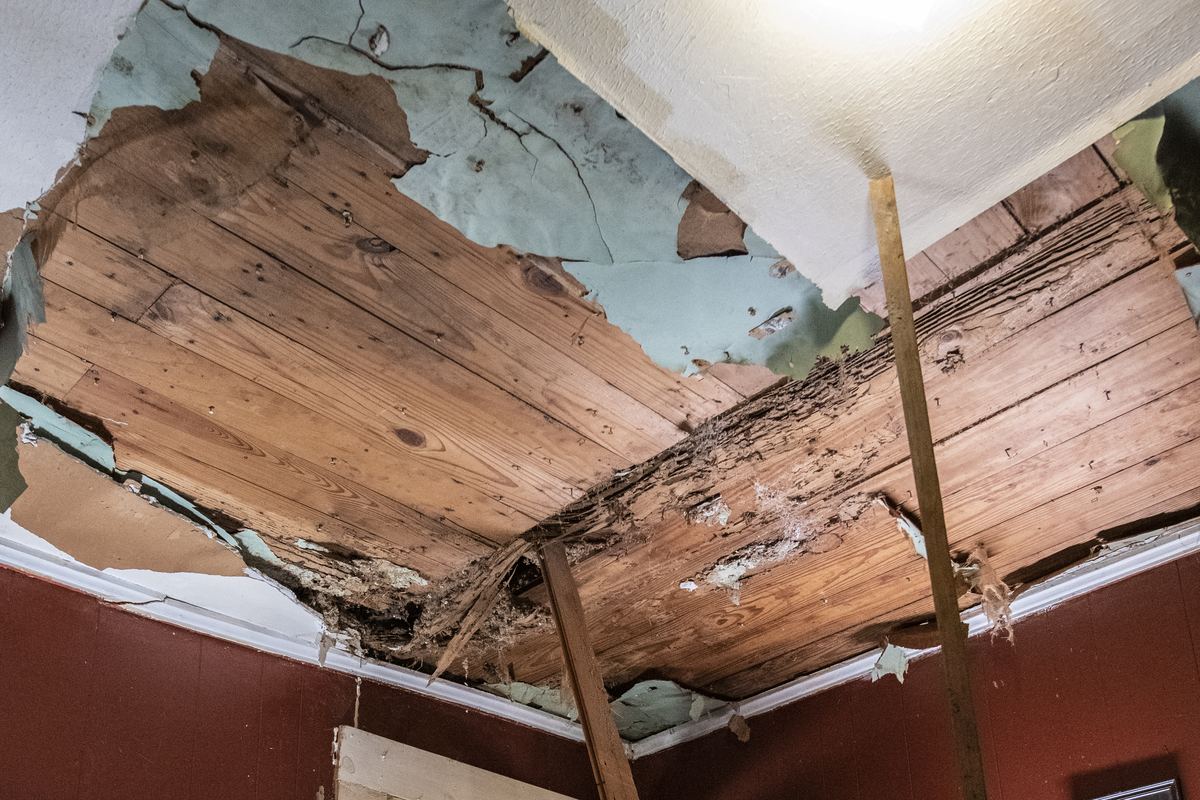
Mold limits in Florida home policies
Even where mold is covered, the state says a cap usually applies.
From the toolkit: "Most insurers limit the amount of mold-related coverage (such as testing and mitigation) it will provide. The most common limit we see is $10,000."
That $10,000 is the figure the department reports seeing most often, not a legal amount. The limit in your own policy may be different.
Mold endorsements: property and liability
The toolkit says that "in some cases, an insured can purchase higher limits of mold coverage for an additional premium."
The Insurance Consumer Advocate's policy endorsements page says: "There are two types of mold endorsements: property and liability."
- Property: the page says it "allows you to increase the mold damage coverage limit to $25,000 or $50,000" and that "your insurance company may offer additional limits."
- Liability: the page says it can "pay for claims from others that you may be held liable for because of mold in your home."
The page gives no price for either endorsement. It says that to learn which endorsements your insurer offers, you contact your insurance agent.
One example: the Citizens HO-3 worksheet
Citizens Property Insurance Corporation says the Florida Legislature created it in August 2002 as a "not-for-profit, tax-exempt, government entity" for property owners "unable to find insurance coverage in the private market."
Its HO-3 coverage worksheet lists "Limited Fungi, Wet or Dry Rot, or Bacteria Coverage" at a $10,000 limit under Section I, Property, and a $50,000 limit under Section II, Liability.
The worksheet calls itself "for informational purposes only" and says your rights and responsibilities "are specifically set forth in your Citizens policy."
Testing versus remediation coverage
Florida law treats finding mold and removing it as two different jobs, defined in Florida Statutes 468.8411.
- Mold assessment: sampling and evaluation "to formulate an initial hypothesis about the origin, identity, location, and extent" of mold growth above a size the statute sets.
- Mold remediation: "the removal, cleaning, sanitizing, demolition, or other treatment, including preventive activities" of mold above that size.
Insurance sources group these costs in their own ways. Here is how each one words it.
Under a homeowners policy
The toolkit gives "testing and mitigation" as its examples of the mold-related coverage that most insurers limit.
The Consumer Advocate's endorsements page says mold damage may call for "mold testing, removal or cleaning" and that "those costs may exceed the limit on your homeowners insurance policy."
Neither page says every homeowners policy pays for testing or for removal. Both describe them as costs that a mold limit applies to.
Under a federal flood policy
The NFIP's standard policy, the Standard Flood Insurance Policy (SFIP), is printed in federal regulations. FEMA's guides to it address mold by name.
Testing: listed as not covered
FEMA's NFIP Claims Handbook puts "Testing for mold" on its list of common expenses not covered by a flood policy.
Its wording: "Generally, mold is excluded under the SFIP, the policy will not pay to determine the type of mold, recommend a remediation protocol or remediate the mold, including the use of HEPA machines."
Cleanup: what the handbook includes
The handbook continues: "Coverage is limited to the removal of non-salvageable flood-damaged building material and application of an anti-microbial to prevent the growth of mold and mildew."
Elsewhere it lists "Treatment for mold and mildew" among what basic cleanup of covered items can include.
The exclusion in the policy form
The SFIP Dwelling Form excludes "water, moisture, mildew, or mold damage that results primarily from any condition" that is "substantially confined to the dwelling" or "within your control".
Its examples of a condition within the owner's control include "design, structural, or mechanical defects" and "failure to inspect and maintain the property after a flood recedes".
FEMA's NFIP Summary of Coverage lists, among excluded losses, "Damage caused by moisture, mildew or mold that could have been avoided by the property owner".
The Department of Financial Services' flood insurance FAQ names a related exclusion: "Water or moisture damage resulting from a condition primarily confined to the insured building."
None of these sources explains how an insurer decides what could have been avoided in a particular home. A private flood policy may also be worded differently from the federal form.
What each source says, in one table
| Mold from a covered peril | Typically covered, and the amount can be limited (Florida Department of Financial Services toolkit) |
|---|---|
| Example of a covered peril | A sudden and accidental discharge of water from a burst pipe (Florida Department of Financial Services toolkit) |
| Continuous leaks not repaired | A policy may specifically exclude the water damage (Florida Insurance Consumer Advocate) |
| Insurers that exclude mold | Some exclude mold-related claims altogether (Florida Department of Financial Services toolkit) |
| Most common mold limit the state sees | $10,000 (Florida Department of Financial Services toolkit) |
| Property mold endorsement | Raises the limit to $25,000 or $50,000; insurers may offer other limits (Florida Insurance Consumer Advocate) |
| Citizens HO-3 worksheet | Limited fungi coverage: $10,000 property, $50,000 liability (Citizens Property Insurance Corporation) |
| Flood damage in a homeowners policy | Excluded by most homeowners policies (Florida Department of Financial Services toolkit) |
| Mold testing under a federal flood policy | Listed as not covered; mold is generally excluded (FEMA, NFIP Claims Handbook) |
Who answers for your home
Your policy sets the terms and your insurer applies them. The toolkit says it is "important to review your insurance needs with your agent or company representative."
It describes the declarations page as a summary of "all the essential information contained in your insurance policy".
The Department of Financial Services' Insurance Consumer Helpline is 1-877-MY-FL-CFO (1-877-693-5236). For general questions about the National Flood Insurance Program, the toolkit gives 877-336-2627.
Where this site fits
This site is a referral service that takes mold requests for homes in Jacksonville and Jacksonville Beach. It does not deal with insurers or claims, and a request sent here is not part of any insurance claim.
Mold and insurance in Florida: more questions
Will insurance pay for a mold test?
Under a homeowners policy, it depends on the policy. The Department of Financial Services toolkit names testing as one example of mold-related coverage that most insurers limit, and the Insurance Consumer Advocate says testing costs may exceed that limit. Under a federal flood policy, FEMA's NFIP Claims Handbook lists testing for mold as an expense that is not covered.
Is mold remediation covered by insurance in Florida?
The toolkit says mold resulting from a covered peril is typically covered, although the amount can be limited, and that some insurers exclude mold claims altogether. The Insurance Consumer Advocate says removal or cleaning costs may exceed the policy's limit, and a mold endorsement can raise it to $25,000 or $50,000. What applies to your home is set by your own policy and insurer.
Does homeowners insurance cover mold from a slow leak?
The state's guides do not answer that for every policy. The Insurance Consumer Advocate's Flood Insurance Myths and Facts guide says a homeowners policy may specifically exclude water damage from continuous leaking of plumbing and pipes that have not been repaired. It asks readers to review their policy for water-related exclusions.
Does flood insurance cover mold?
FEMA's NFIP Claims Handbook says mold is generally excluded under the Standard Flood Insurance Policy and that the policy will not pay to determine the type of mold or remediate it. It says coverage is limited to removing non-salvageable flood-damaged building material and applying an anti-microbial. A private flood policy may be worded differently, so that policy and its insurer decide.
Sources
- Florida Department of Financial Services, Homeowners' Insurance Toolkit (revised March 2024). https://www.myfloridacfo.com/docs-sf/consumer-services-libraries/consumerservices-documents/understanding-coverage/consumer-guides/english---homeowners-insurance-toolkit.pdf. Read 2026-11-22.
- Florida Office of the Insurance Consumer Advocate, Homeowners Insurance Policy Endorsements. https://myfloridacfo.com/division/ica/fullcoverage/homeowners/policyendorsements. Read 2026-11-22.
- Florida Office of the Insurance Consumer Advocate, Flood Insurance Myths and Facts. https://www.myfloridacfo.com/docs-sf/insurance-consumer-advocate-libraries/ica-documents/flood-insurance-myths-and-facts-guide.pdf. Read 2026-11-22.
- Florida Department of Financial Services, Flood Insurance Coverage FAQs. https://www.myfloridacfo.com/division/consumers/storm/flood-disaster-faqs. Read 2026-11-22.
- Citizens Property Insurance Corporation, HO-3 Coverage Worksheet, Homeowners. https://www.citizensfla.com/documents/20702/3728641/PL+Citizens+H03+Coverage+Worksheets.pdf/eaa11755-fa61-427a-afce-d2277effe43a?t=1715894568844. Read 2026-11-22.
- Citizens Property Insurance Corporation, Who We Are. https://www.citizensfla.com/who-we-are. Read 2026-11-22.
- FEMA, National Flood Insurance Program Claims Handbook (August 2024). https://agents.floodsmart.gov/sites/default/files/media/document/2025-07/fema-nfip-claims-handbook-08-2024.pdf. Read 2026-11-22.
- FEMA, NFIP Summary of Coverage (December 2023). https://agents.floodsmart.gov/sites/default/files/media/document/2025-07/fema-nfip-summary-coverage-brochure-12-2023.pdf. Read 2026-11-22.
- Standard Flood Insurance Policy, Dwelling Form (44 CFR Part 61, Appendix A(1), eCFR). https://www.ecfr.gov/current/title-44/chapter-I/subchapter-B/part-61/appendix-Appendix%20A%281%29%20to%20Part%2061. Read 2026-11-22.
- Florida Statutes 468.8411, Definitions. https://www.leg.state.fl.us/statutes/index.cfm?App_mode=Display_Statute&URL=0400-0499/0468/Sections/0468.8411.html. Read 2026-11-22.
Related page
What a Florida licensed mold assessor looks at, and when sampling is part of it: mold inspection and mold testing.
Other guides
Mold after water damage: the first days and Florida mold license types.
How to ask
Send a request for a mold inspection. A company whose mold assessor holds a Florida license may receive it, and that company may pay us for the introduction.