The short answer: Find and stop the water, clean a patch smaller than about 10 square feet yourself with gloves, goggles and a respirator, and know that anything larger falls under Florida's definition of mold remediation. Each practice depends on the one before it.
Juniper Tide Mold Referrals is a referral service; we do not clean or remove mold. Each step below is taken from the U.S. Environmental Protection Agency (EPA), the Florida Department of Health or Florida's statutes, named where it is used and listed with its date at the end.
Practice one: the water source
The EPA's Brief Guide to Mold, Moisture and Your Home gives the reason this comes first. It says every type of mold needs water or moisture to grow, and that cleaning up mold without fixing the water problem means the mold will most likely come back.
The Florida Department of Health says the same thing in its cleanup answer: any water leaks must first be fixed when solving mold problems.
Where the moisture comes from
The health department keeps a list of the ways moisture gets into a building. Five of the sources it names:
- Leaks from outside through the roof, walls or floors
- Plumbing leaks inside the house, or a broken water pipe
- Overflow from a sink, tub, toilet, air conditioner drain pan or sewer line
- Condensation, from indoor humidity that runs too high or a surface that stays too cold
- Storm water or storm surge coming in from outside
Drying after the repair
Once the leak is fixed, the EPA's cleanup tips say to dry every item completely. Its guide sets the window at 24 to 48 hours to keep new growth from starting on water damaged areas and items.
Sewage or other dirty water
One kind of water takes the job out of a homeowner's hands from the start. The EPA says that when the damage came from sewage or other contaminated water, the call goes to a professional with experience cleaning and fixing buildings damaged by that kind of water.
Practice two: a small patch, cleaned with care
Size decides who cleans. If you plan to get rid of mold in your home without help, the EPA's limit is a moldy area under about 10 square feet, less than roughly a 3 foot by 3 foot patch, which in most cases you can handle yourself by following its guidelines.
Health comes before the scrub brush. The EPA tells anyone with health concerns to talk with a health professional before the cleanup begins, and the health department adds that the people doing the cleaning should be free of symptoms and allergies.
The cleanup steps both agencies give
- Scrub mold from hard surfaces using detergent and water, or soapy water or a store bought mildew or mold cleaner, as the health department puts it.
- Dry the cleaned area thoroughly afterward.
- Throw out the sponges and rags used on the mold, the health department says.
- Expect porous things such as carpet and ceiling tiles to be thrown away if they are moldy; the EPA says mold can fill their crevices and may be impossible to remove completely.
- Leave paint and caulk for later. The EPA says to clean and dry the surface first, because paint put over mold is likely to peel.
Gear for a small job
The EPA's list is short: an N-95 respirator that fits properly, gloves long enough to reach the middle of the forearm, and goggles without ventilation holes.
Ordinary household rubber gloves are fine with water and mild detergent, the EPA says. A bleach or strong cleaning solution calls for gloves of natural rubber, neoprene, nitrile, polyurethane or PVC.
Where bleach fits
Neither agency treats bleach as the main step. The health department says killing indoor mold with bleach or other chemicals is not needed in most cases, and that the aim is to remove the growth.
The EPA explains why killing is not enough: mold that is dead can still trigger allergic reactions in some people, so it has to be physically removed.
Never combine bleach with an ammonia cleaner. The EPA warns of toxic fumes, and the health department says a dangerous chlorine gas may form.
Practice three: larger growth, past the 10 square feet line
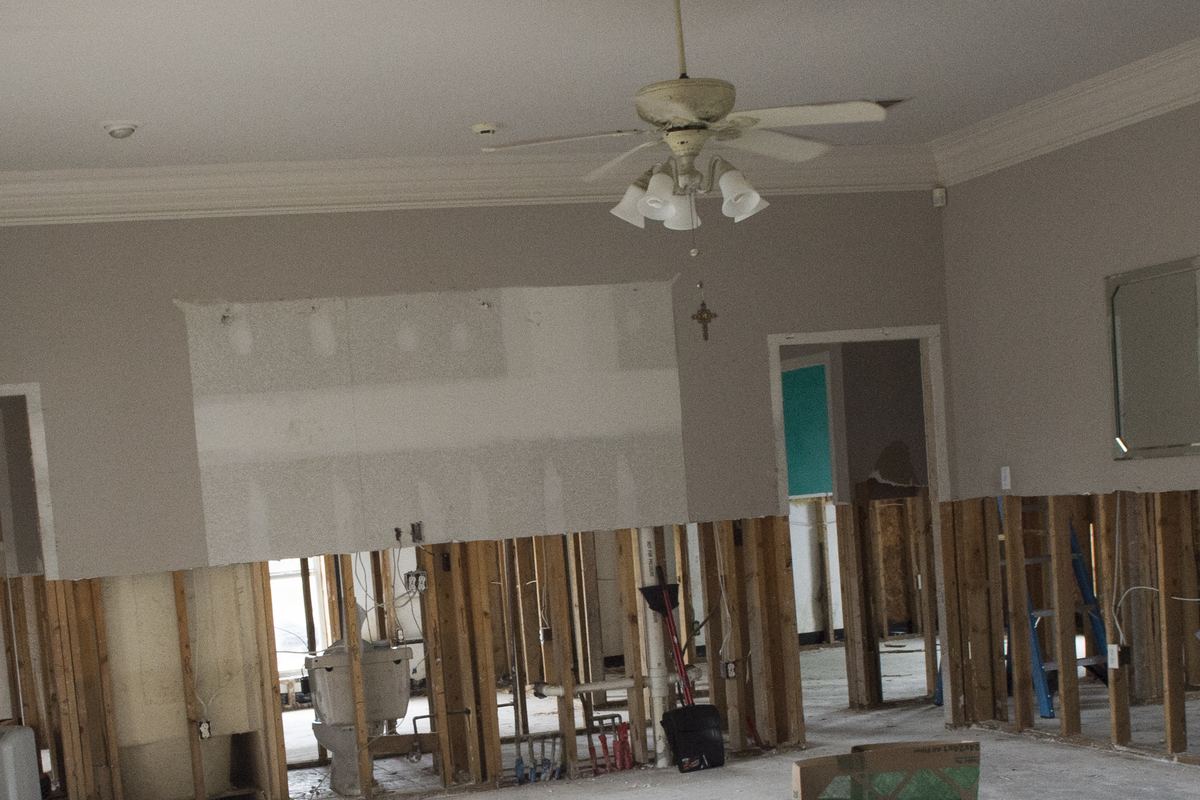
Above that size, the EPA stops describing a homeowner's job. For mold over 10 square feet, or after a lot of water damage, it sends readers to its remediation guide for schools and commercial buildings, a document it says fits other building types too.
Where Florida law draws the line
Florida's definition uses the same number. Under Section 468.8411, Florida Statutes, mold remediation means work such as cleaning, removal, demolition or sanitizing of mold, or of matter it has contaminated, once the growth is greater than 10 square feet.
The statute calls any person who performs that work a mold remediator.
Licensing for that work sits with the Florida Department of Business and Professional Regulation, the agency that licenses and regulates mold remediators as well as mold assessors. The two license types are set side by side in our guide to Florida mold license rules.
Other signs a job is past a homeowner's cleanup
- Mold you suspect in the air conditioner or ducts. Running that system, the EPA says, could carry mold through the whole house, so it should stay off.
- A musty smell with no visible source. The EPA says to consider hiring an experienced professional when you believe mold is hidden, and warns that peeling back wallpaper over mold can release a large burst of spores.
- Sewage or contaminated water, covered under practice one above.
What the EPA says to ask of whoever does the work
Whoever you hire, the EPA says to make sure they have experience cleaning up mold and to check their references. It also says to ask that they follow its remediation guide or the guidelines of professional or government groups such as ACGIH or IICRC.
Signs the cleanup is finished
The EPA uses the same test for a homeowner's cleanup and a professional remediation:
- The water or moisture problem is fully fixed; until it is, the cleanup is not finished.
- No visible mold and no moldy smell remain, though staining may stay behind.
- A return visit soon after shows no new water damage or growth.
- People can use the room again without health complaints or physical symptoms.
The EPA itself calls the final decision a judgment call with no easy answer. Once the mold is gone, keeping the house dry is a separate subject, covered in how to keep mold from coming back.
How this site fits in
The three practices to get rid of mold in your home read the same in Jacksonville as anywhere else in Florida, because they come from state and federal sources. For a beach home, see mold inspection in Jacksonville Beach.
Our role is to take requests from homeowners in Jacksonville and Jacksonville Beach. You do not pay us to ask; an independent company whose mold remediator or mold assessor holds a Florida license may pay us for each introduction.
Getting Rid of Mold: Questions Readers Ask
Is 10 square feet a firm limit for cleaning mold myself?
The EPA's wording is "in most cases": a patch under about 10 square feet is usually one you can handle, and a lot of water damage is its own reason to look past do it yourself. Florida's statute uses greater than 10 square feet to define mold remediation. The EPA also names cases of any size, such as sewage water or a suspect air conditioner, where it points to a professional.
Do I need a mold test before I start cleaning?
Usually not, by the agencies' own account. The EPA says sampling is unnecessary in most cases where mold can already be seen, and the Florida Department of Health does not recommend testing to learn whether mold is present or which kind it is. The EPA does say surface sampling may help show whether an area was cleaned well.
Can I paint over mold to hide it?
The EPA says not to paint or caulk moldy surfaces. Its guide says to clean up the mold and dry the surface before painting, and that paint applied over mold is likely to peel.
Will an ozone machine clear the mold?
The Florida Department of Health answers this one directly with a no. It says ozone irritates the lungs and is not likely to work against an indoor mold problem, and that the fix is to deal with the cause, usually moisture, and then clean or remove the moldy material.
Sources
- U.S. Environmental Protection Agency, A Brief Guide to Mold, Moisture and Your Home. https://www.epa.gov/mold/brief-guide-mold-moisture-and-your-home. Read 2026-11-23.
- U.S. Environmental Protection Agency, Mold Cleanup in Your Home. https://www.epa.gov/mold/mold-cleanup-your-home. Read 2026-11-23.
- Florida Department of Health, Indoor Mold and Your Health. https://www.floridahealth.gov/community-environmental-public-health/environmental-public-health/air-quality/mold/. Read 2026-11-23.
- The 2026 Florida Statutes, Section 468.8411, Definitions. https://www.leg.state.fl.us/statutes/index.cfm?App_mode=Display_Statute&URL=0400-0499/0468/Sections/0468.8411.html. Read 2026-11-23.
- Florida Department of Business and Professional Regulation, Mold-Related Services. https://www2.myfloridalicense.com/mold-related-services/. Read 2026-11-23.
Related service
Mold remediation and mold removal: how a job past 10 square feet runs, from containment to the check at the end.
Other guides
Mold after water damage: the first days and what drives mold remediation cost.
How to ask
Send a request with the form on the contact page. A company whose mold remediator holds a Florida license may receive it, and it may pay us for the introduction.