The short answer: Mold grows where water collects or condenses, and the EPA and the Florida Department of Health point to the bathroom, the air conditioning system, the attic, the plumbing and cold surfaces. Spots inside a wall, a duct or a roof are hard to see, and finding them is what a mold inspection by a Florida licensed mold assessor is for.
We are a referral service called Juniper Tide Mold Referrals, and we do not do mold work. The places on this page come from EPA and Florida Department of Health guides, each named in the text and dated in the list of sources.
Telling mold from a stain is a different question, covered in our guide to the common signs of mold in a house.
What the Places on This List Share
Where mold grows in a house follows the water: each room below holds some, at least part of the time. The EPA's first mold course chapter says mold does not need a lot of water, and that a little condensation in a bathroom or around a window sill can be enough.
Its third chapter names bathrooms, laundry and utility rooms and basements as common places for mold in homes because they are always or often damp. It advises checking, on a regular basis, the areas that have been wet or are likely to get wet.
Bathrooms
The Florida Department of Health counts poorly vented bathroom and kitchen moisture, the steam from a shower or from cooking, among the sources of water indoors.
Tile, Grout and the Shower Walls
Bathroom tile and grout lead the EPA course's list of common indoor mold sites.
The EPA's Brief Guide to Mold, Moisture and Your Home admits that rooms which are often or always damp are hard to keep entirely free of mold. For shower mold that keeps coming back, it says more ventilation and more frequent cleaning will usually stop the regrowth or hold it to a minimum.
The Fan and the Window
The ventilation the Brief Guide means is simple: run the bathroom fan or open the window while you shower.
Bathroom Floors
One of the health department's prevention steps is short: do not carpet bathrooms or basements.
The reason shows up in the EPA's list of hidden spots, which includes the underside of carpets and pads.
The Air Handler and Ducts
The health department tells homeowners to check around air handling units for standing water. It also says to inspect the evaporator coils, liner surfaces, drain pans and drain lines as a routine.
Cooling Coils and the Drain Pan
The EPA's guide Should You Have the Air Ducts in Your Home Cleaned? points to the coils first. It says research suggests condensation on or near the cooling coils of an air conditioner is a major factor in moisture getting into the system.
The same guide says to make sure the condensate pan drains properly, and that a lot of standing water or debris in it is a problem that needs attention right away. It also says to check the insulation near the coils for wet spots.
The EPA's second mold course chapter adds how the pan should be set: sloped toward the drain, with the drain flowing freely.
Inside the Ductwork
Among the places hidden moisture can feed mold, that chapter lists porous thermal or acoustic liners inside duct work. The Brief Guide names the inside of ductwork as a hidden spot too.
The duct guide is plain about lined ducts: if the insulation inside an air duct gets wet or moldy, it cannot be cleaned well and should be removed and replaced.
Parts You Cannot See Into
Many sections of a heating and cooling system cannot be reached for a visual check, the duct guide notes. It tells homeowners to ask a service provider to show them any mold the provider says is there.
A Unit Too Big for the House
Size matters as well. The duct guide says an oversized air conditioner cycles on and off often and removes moisture poorly, more so in humid areas.
The Attic and the Roof
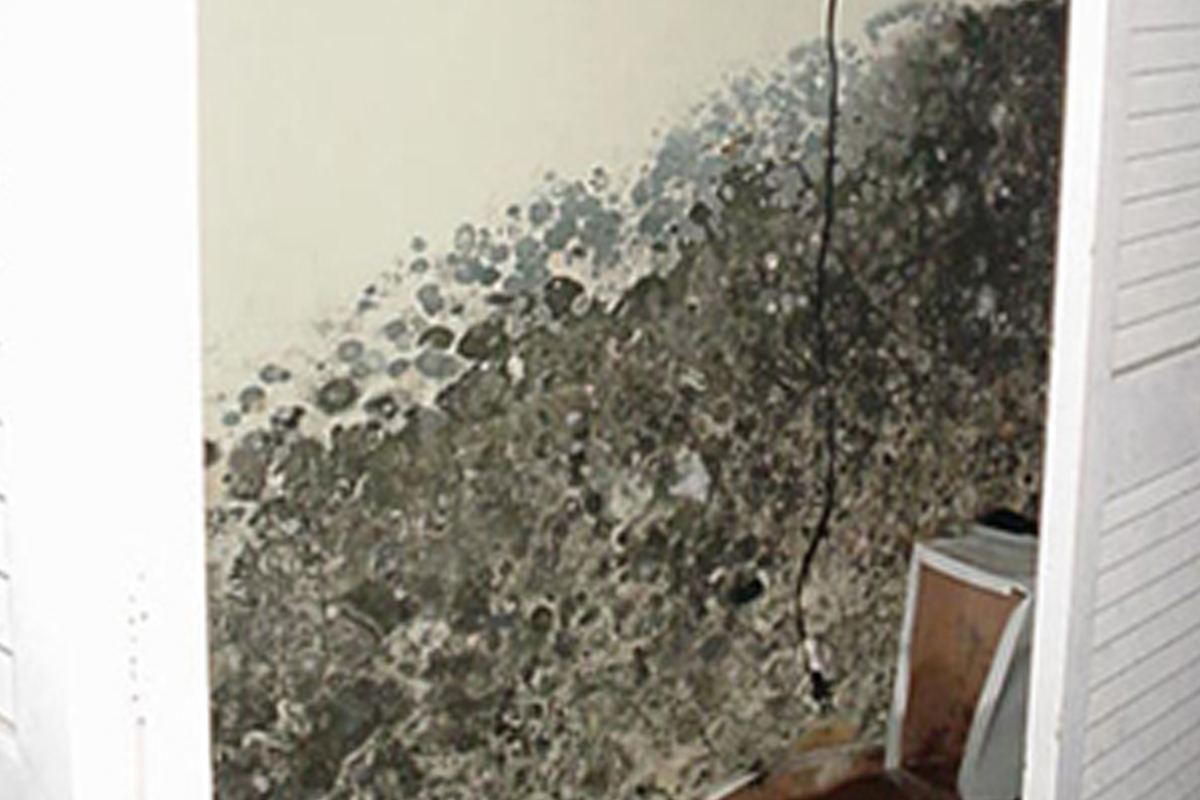
The health department lists water leaking in from outside, through the roof, walls or floors, as a source of indoor moisture. The Brief Guide places hidden mold in roof materials above ceiling tiles, from roof leaks or from too little insulation.
Ducts Running Through the Attic
Ducts in spaces the air conditioner does not cool, such as attics and crawl spaces, should be sealed and insulated, the duct guide says, so condensation does not bring moisture into the system.
A photo in the EPA's second course chapter shows the problem on a bare duct. Its caption names condensation on an uninsulated air conditioning duct and gives the fix: insulate the duct on the outside.
Gutters and Downspouts
The same chapter counts landscaping, gutters and downspouts that send water into or under a building among common moisture problems. The Brief Guide's answer is to clean and repair roof gutters regularly.
Under Sinks
The EPA course names the area around sinks as a common indoor mold site. The health department lists overflowing sinks, along with plumbing leaks and broken pipes, as sources of water indoors.
Pipes That Leak or Sweat
A pipe does not have to leak. The Brief Guide places hidden mold inside walls around pipes that are leaking or condensing, and its advice for cold water pipes is to cover them with insulation.
Where the Pipes Go Next
The pipes under a sink run back into the wall. The EPA's second chapter says the insides of walls where pipes and wires run, called pipe chases and utility tunnels, are common sites of mold growth.
Window Frames
Areas around windows are on the EPA course's list of common sites, and a window sill is one of its two examples of how little water mold needs.
The EPA's Ten Things You Should Know About Mold lists windows first among cold surfaces where condensation can form, and says adding insulation reduces the chance of it.
Behind Furniture on Outside Walls
The Brief Guide lists the surface of walls behind furniture, where condensation forms, as a possible place for hidden mold. The EPA's second chapter says mold is often found on walls in cold corners behind furniture.
Cold Walls and Still Air
The Ten Things page counts exterior walls among the cold surfaces where condensation can form. Among its steps against condensation, the Brief Guide lists more air movement: open doors and windows when practical and use fans as needed.
The Back of the Wall
The surface you see is not the only one. The EPA's third chapter lists the back side of drywall, wallpaper and paneling among the hidden surfaces where mold can grow.
Laundry Rooms
The health department lists drying wet clothes indoors and not venting clothes dryers outdoors, electric dryers included, as moisture sources. The EPA's second chapter adds that clothes dryers should be vented to the outside, not into a garage.
When a Spot Is Out of Reach
The EPA's third chapter warns that looking for hidden mold takes care, because disturbing moldy areas may spread mold through the building. Even opening and closing an air handler, it says, can send high levels of dust and mold into the air.
A first look at these places is what the mold visual inspection page describes. To ask for one, use the form on our Jacksonville home page; a company whose mold assessor holds a Florida license may receive your request and may pay us for the introduction.
If your home is near the ocean, the page on mold inspection in Jacksonville Beach covers that area.
Where Mold Grows in a House: Questions Readers Ask
Do dusty return vents mean there is mold in the ducts?
Not by themselves, the EPA's duct guide says. It calls dusty return registers normal, since dust laden air is pulled through the grate, and says this does not show the ducts are contaminated. It adds that if no one in the home has allergies or unexplained symptoms and a look inside the ducts shows no musty odor or visible mold, duct cleaning is probably unnecessary.
Will cleaning the ducts keep mold from coming back?
The duct guide says that if the conditions that caused the mold growth are not corrected, mold growth will recur. It calls controlling moisture the most effective way to prevent biological growth in every type of air duct.
Should the air conditioner stay off if mold is found in it?
The Florida Department of Health answers ideally, yes: the system should be shut down while cleaning or mold removal is done. It also grants that stopping the air conditioning would make most Florida buildings very uncomfortable in hot and humid weather.
Can a damp crawl space affect the rooms above it?
The EPA's second mold course chapter says it can. It calls crawl spaces with high humidity common sites of hidden mold, especially those with a bare earth floor, and says that moisture can pass into the rest of the building through cracks in walls, floors and ceilings.
Sources
- U.S. Environmental Protection Agency, A Brief Guide to Mold, Moisture and Your Home. https://www.epa.gov/mold/brief-guide-mold-moisture-and-your-home. Read 2026-11-23.
- U.S. Environmental Protection Agency, Mold Course Chapter 1. https://www.epa.gov/mold/mold-course-chapter-1. Read 2026-11-23.
- U.S. Environmental Protection Agency, Mold Course Chapter 2. https://www.epa.gov/mold/mold-course-chapter-2. Read 2026-11-23.
- U.S. Environmental Protection Agency, Mold Course Chapter 3. https://www.epa.gov/mold/mold-course-chapter-3. Read 2026-11-23.
- U.S. Environmental Protection Agency, Ten Things You Should Know About Mold. https://www.epa.gov/mold/ten-things-you-should-know-about-mold. Read 2026-11-23.
- U.S. Environmental Protection Agency, Should You Have the Air Ducts in Your Home Cleaned?. https://www.epa.gov/indoor-air-quality-iaq/should-you-have-air-ducts-your-home-cleaned. Read 2026-11-23.
- Florida Department of Health, Indoor Mold and Your Health. https://www.floridahealth.gov/community-environmental-public-health/environmental-public-health/air-quality/mold/. Read 2026-11-23.
Related service
Mold inspection and mold testing: the visit in order, from questions about your home's water history to the lab report.
Other guides
Common signs of mold in a house and Mold and indoor air quality
How to ask
Found one of these spots in your home? Send a request from the contact page. A company whose mold assessor holds a Florida license may get it, and that company may pay us for the introduction.