The short answer: The Florida Department of Health says indoor mold growth can usually be seen or smelled, so your eyes and nose come first. When the signs point to growth you cannot reach or see, a mold inspection by a Florida licensed mold assessor is the next step this site can help you ask for.
Juniper Tide Mold Referrals is a referral service; we do not inspect homes for mold. Every sign below is taken from the EPA or the Florida Department of Health, named where it is used and listed with its date at the end.
This page is about the signs themselves. For the rooms and spots where growth tends to start, read our room by room guide on where mold grows in a house.
Signs You Can See
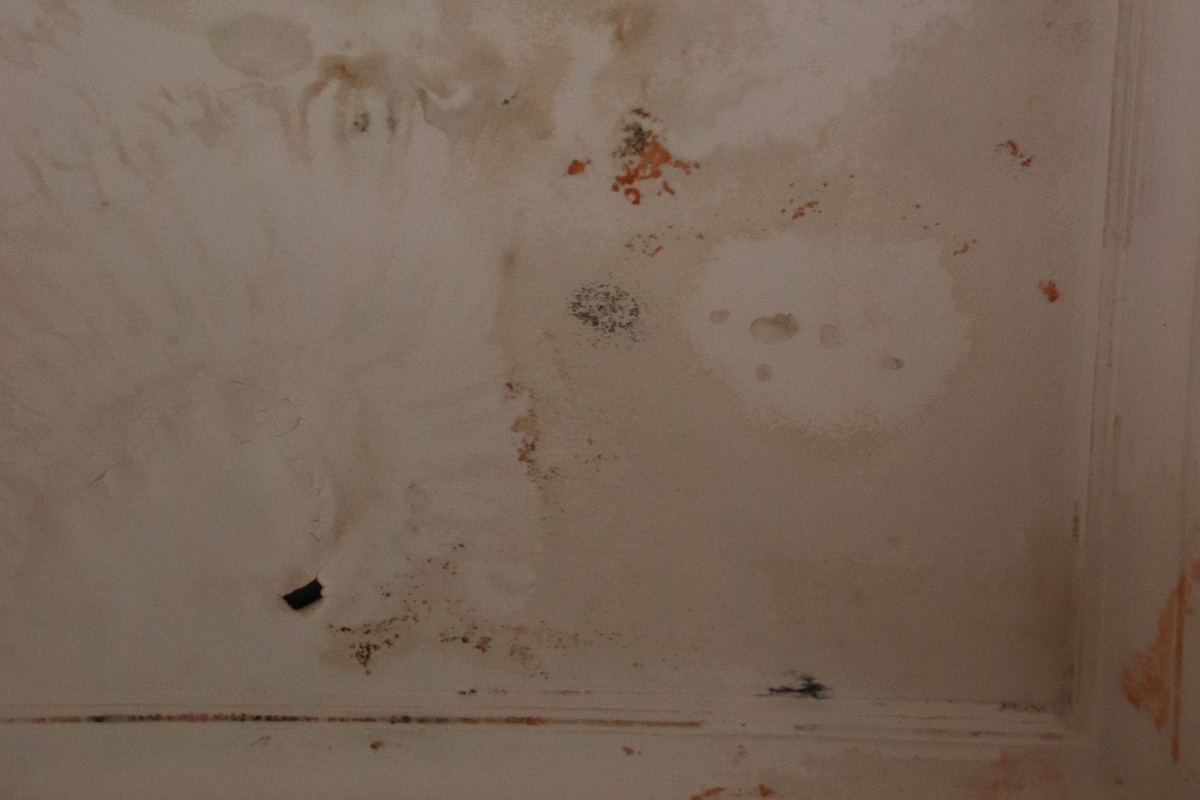
Visible growth is the plainest of the signs of mold in house walls, ceilings and furniture. The two agencies describe it in some detail.
Texture and Color
The Florida Department of Health says growth may have a cottony, velvety, rough or leathery surface. Its list of colors runs from white and gray through brown and black to yellow and green.
The EPA's mold course adds a reminder for anyone looking only for dark patches: mold comes in many colors, not just black.
Stains and Fuzzy Patches
Mold often shows up as a stain or a fuzzy growth, the health department says. It names furniture and building materials such as walls, ceilings and anything made of wood or paper.
Water Clues Close By
The department also tells homeowners to look for signs of moisture or water damage, and it gives four examples: water leaks, standing water, water stains and condensation.
Beads on Windows, Walls or Pipes
The EPA's Brief Guide to Mold, Moisture and Your Home says condensation can be a sign of high humidity. When it collects on windows, walls or pipes, the guide says to act quickly: dry the wet surface and cut back the source of the moisture.
Rust on a Drain Pipe
One photo in the same guide shows a rusty drainpipe. Its caption reads the rust as an indicator that condensation forms on that pipe, and says the pipe should be insulated to stop it.
Things That Only Look Like Mold
The EPA's mold course warns that not everything that looks like mold is mold. Its examples are paint on the back of drywall or wood, alkaline crystals on soil or concrete walls, and carpet stains.
The crystals still say something. The course notes that a white, fibrous material on crawl space soil that dissolves in water may be alkaline salts, a sign that moisture has been a problem there.
Signs You Can Smell
Smell is a sign the health department tells you to follow: search the areas where you notice mold odors. If you smell something earthy or musty, it says, you may have a mold problem.
Where the Musty Smell Comes From
The EPA's first mold course chapter explains the odor. Growing molds release compounds with strong smells, called microbial volatile organic compounds (mVOCs), and these are often the source of the musty smell linked to mold.
That chapter treats the odor as reason enough to look further: in its words, a moldy odor suggests mold is growing and should be investigated.
A Smell With Nothing in Sight
A smell without a visible spot is one of the two cases the EPA's Brief Guide gives for suspecting hidden mold. The other is a home with known water damage where the people living there report health problems.
A dark closet or wall cavity is no protection. Mold needs no light, the EPA's mold course explains, so it can grow in dark spots and on surfaces nobody sees.
Signs You May Feel
Some signs are not on any surface. They show up in the air of a room, in the house itself over time, or in the people who live there.
Air That Stays Humid
The Florida Department of Health says indoor mold growth can be found where humidity levels are high, and it names basements and showers. It sets the mark at 60 percent relative humidity and says below 50 percent is best for controlling mold and dust mites.
The EPA's Brief Guide says relative humidity can be measured with a moisture or humidity meter, a small instrument sold at many hardware stores. A reading taken that way turns a damp feeling into a number.
An Air Conditioner That Cannot Keep Up
The health department gives one sign that is specific to homes with central air. If you need a dehumidifier to bring relative humidity below 60 percent, it says, you should have the air conditioning system examined for problems.
Damage to Wood and Drywall
The EPA's mold course says mold digests what it grows on. Left unchecked, it lists what that growth can do: rot wood, damage drywall, stain furnishings and, in time, cause structural damage to a building.
Symptoms the Agencies List
The Florida Department of Health treats symptoms as a sign too: if people who are allergic to mold have symptoms while in your home, it says, you may have a mold problem.
For people sensitive to molds, the department lists nasal and sinus irritation or congestion, a dry hacking cough, wheezing, skin rashes or burning, and watery or reddened eyes.
The EPA's mold course adds a caution: all of these symptoms may have causes unrelated to mold, so the course warns against assuming mold is behind them. For health questions, the course points readers to a health professional or a state or local health department.
When a Sign Means Calling for an Inspection
Neither agency sends all the signs of mold in a house to a professional. What decides it, in their guides, is the size of the growth, whether you can see it, and what the water was.
A Small Patch in Plain View
Both the EPA and the Florida Department of Health use the same size line. If the moldy area is less than about 10 square feet, roughly a 3 foot by 3 foot patch, they say that in most cases you can handle the job yourself.
The EPA's Brief Guide adds that the water problem has to be fixed as well. Clean the mold but leave the water problem, it says, and the mold problem will most likely come back.
Signs the Agencies Pass to a Professional
- A moldy smell with no visible source, or known water damage with health complaints: the EPA's Brief Guide says that if you believe you may have a hidden mold problem, consider hiring an experienced professional.
- Growth over about 10 square feet, or a lot of water damage: both agencies point to the EPA guideline Mold Remediation in Schools and Commercial Buildings, which the health department says also helps with other building types.
- Mold suspected in the heating or cooling system: the EPA's Brief Guide warns against running a system you know or suspect is contaminated, since it could carry mold through the whole house.
- Damage from sewage or other contaminated water: the health department says to call a professional with experience cleaning and fixing buildings damaged by contaminated water.
Why Hidden Spots Are Opened With Care
The EPA's Brief Guide gives an example of the risk: pulling off wallpaper can release a massive amount of spores if mold is growing underneath it.
Its mold course says investigating hidden mold may call for a professional with experience in water and mold damaged buildings, and that tools such as borescopes and moisture meters may help locate it.
The Florida Term for This Work
Section 468.8411, Florida Statutes sets out what the law means by a mold assessment. In short, a mold assessor samples, reviews the building's history and inspection findings, and forms a first hypothesis about where growth of more than 10 square feet came from, what it is, where it sits and how far it reaches.
The Florida Department of Business and Professional Regulation licenses mold assessors, and its page defines a mold assessor as any person who performs or directly supervises a mold assessment. Our guide to Florida mold license types explains how to look one up.
Sending a Request
The short form sits on our Jacksonville home page. A company whose mold assessor holds a Florida license may receive what you send there, and that company may pay us for the introduction.
Readers by the coast can start from the page on mold inspection in Jacksonville Beach, and the mold visual inspection page covers what a first look can and cannot find.
Signs of Mold: Questions Readers Ask
Do I need a mold test to confirm what I can see?
Usually not, by the Florida Department of Health's account: where growth is visible, it says sampling is in most cases not needed. The department goes further and says it does not recommend testing or sampling to find out whether you have a mold problem or which kind is growing. Our mold testing page covers the cases where sampling is used.
Does the color of the growth tell me how dangerous it is?
The Florida Department of Health says there is no need to learn which type you have. In its view every mold gets the same treatment for health risk and for removal, and it notes very few reports of so called toxic molds in homes causing unique or rare conditions.
Should the smell be gone after a cleanup?
Yes, by the EPA's measure. Its Brief Guide says that once mold removal is complete, visible mold and moldy odors should not be present. It also notes that mold may leave staining and cosmetic damage that cleaning cannot fully undo.
Can mold harm the house if I leave it?
The EPA's Brief Guide says mold damages what it grows on, and that the longer it grows, the more damage it can cause. Its mold course lists rotted wood, damaged drywall and, left unchecked, structural damage among the results.
Sources
- Florida Department of Health, Indoor Mold and Your Health. https://www.floridahealth.gov/community-environmental-public-health/environmental-public-health/air-quality/mold/. Read 2026-11-23.
- U.S. Environmental Protection Agency, A Brief Guide to Mold, Moisture and Your Home. https://www.epa.gov/mold/brief-guide-mold-moisture-and-your-home. Read 2026-11-23.
- U.S. Environmental Protection Agency, Mold Course Chapter 1. https://www.epa.gov/mold/mold-course-chapter-1. Read 2026-11-23.
- U.S. Environmental Protection Agency, Mold Course Chapter 3. https://www.epa.gov/mold/mold-course-chapter-3. Read 2026-11-23.
- Florida Statutes, Section 468.8411, Definitions. https://www.leg.state.fl.us/statutes/index.cfm?App_mode=Display_Statute&URL=0400-0499/0468/Sections/0468.8411.html. Read 2026-11-23.
- Florida Department of Business and Professional Regulation, Mold-Related Services. https://www2.myfloridalicense.com/mold-related-services/. Read 2026-11-23.
Related service
Mold inspection and mold testing: how a Florida licensed mold assessor goes from your home's water history to a lab report.
Other guides
Where mold grows in a house and Mold after water damage: the first days
How to ask
If the signs on this page match your home, send a request on the contact page. It may reach a company whose mold assessor holds a Florida license, and that company may pay us for the introduction.