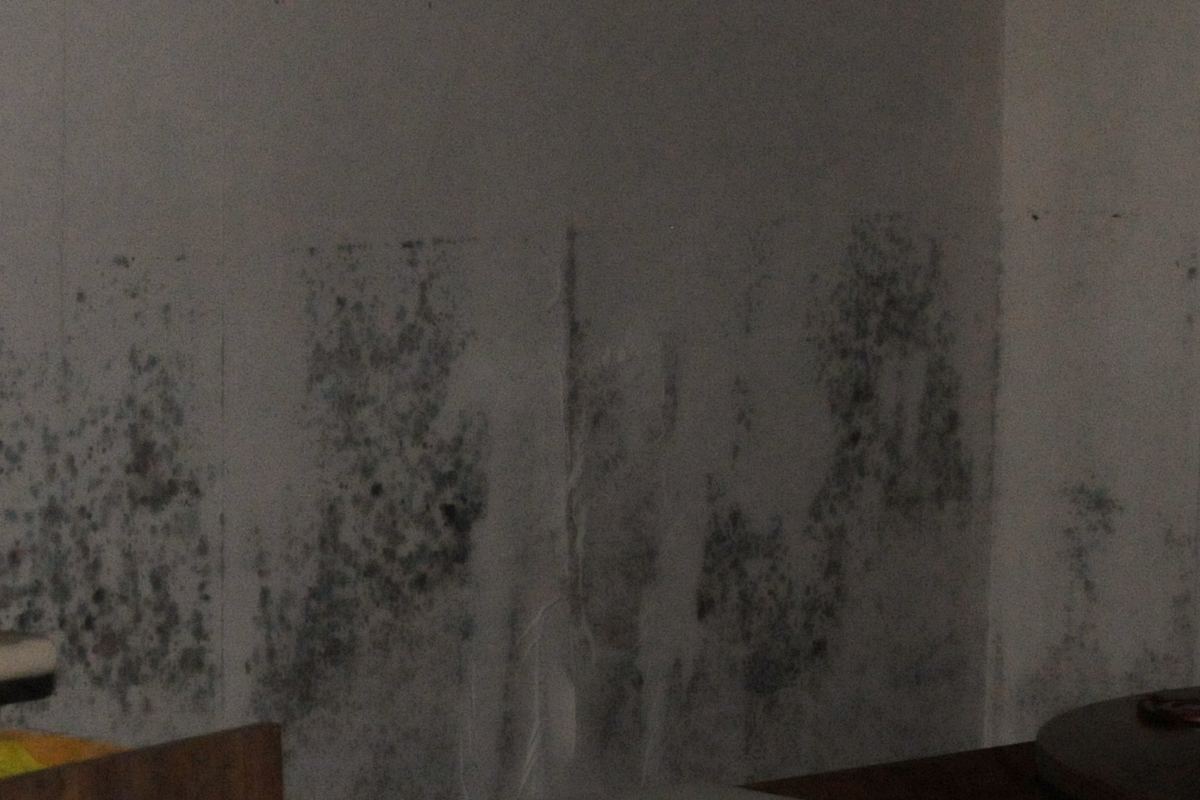
The short answer: The mold most often called black mold, Stachybotrys chartarum, needs two things according to the CDC: a material rich in cellulose and moisture that does not let up. Once dark growth is in the house, our page on mold testing explains what sampling can and cannot settle.
Juniper Tide Mold Referrals refers homeowners; it does not test, identify or remove mold. On a health topic like this one, every statement is the named agency's, quoted or kept close to its wording.
Two Meanings of Black Mold
The EPA's mold course says the phrase is not a species and not a specific kind of mold. The same holds, it says, for the phrase toxic mold.
In news stories, according to the EPA, the two terms point either to molds that may make mycotoxins or to one particular mold, Stachybotrys chartarum. The course adds a third name for molds that make mycotoxins: toxigenic fungi.
The One Mold With the Nickname
The CDC describes Stachybotrys chartarum in one line as a greenish black mold. Its color is part of its description, but color alone is not how the agencies sort mold, as the second half of this page shows.
What Causes Black Mold, Part by Part
The CDC's answer to what causes black mold fits in three sentences on its fact page. One names what the mold grows on and two name the water.
Materials High in Cellulose
The CDC gives three examples of the high cellulose material Stachybotrys can grow on: fiberboard, gypsum board and paper.
Gypsum Board Is Drywall
The EPA's second course chapter uses gypsum board, wallboard and drywall as names for the same material. It lists the back side of drywall, paneling and wallpaper among the places hidden mold can grow.
Water Sources the CDC Names
- Water damage
- Water leaks
- Condensation
- Water infiltration
- Flooding
The Word Constant
The CDC's last sentence on causes is the strictest one: its growth needs constant moisture. For this mold, then, the cause is a material that stays wet, not one that got wet once and dried.
Spores, humidity and the everyday sources of indoor water apply to every mold, and they have their own guide: what causes mold.
Color and Toxicity: The Agencies' Words
Most worry about black mold is really a question about toxins and health. The agencies answer it themselves, so this section only reports what they say.
Dark Is a Common Color
The Florida Department of Health describes visible mold in colors from white and gray to brown, black, yellow and green. It may look cottony, velvety, rough or leathery, the department says.
The EPA's page What Are Molds? makes the same point with a photo of firewood carrying both white and black growth, captioned that molds come in many colors.
Mycotoxins
The EPA's course says that as molds grow, some of them, not all, may make potentially toxic byproducts called mycotoxins under some conditions. It reports that more than 200 mycotoxins from common molds have been identified, with many more still to find.
It also says the amount and types a mold makes depend on many environmental and genetic factors. And it says plainly that nobody can tell by looking whether a mold is making mycotoxins.
Florida's Health Department on Toxic Mold
The department calls molds that can make mycotoxins common, and notes that people sometimes call them toxic mold. It says reports of such molds in homes causing unique or rare health conditions are very few.
It describes the toxic effects of certain molds as not well understood and as a topic of controversy among doctors and scientists. In its view, allergic disease is now the most likely health problem tied to mold exposure.
The CDC on Infants and on Testing
The CDC answers a question many people find online, about bleeding in the lungs of infants. It says a link between acute idiopathic pulmonary hemorrhage in infants and Stachybotrys chartarum has not been proven, and that more study is needed.
On testing, the CDC says there is at present no test that proves Stachybotrys chartarum is tied to particular symptoms. It says people whose symptoms persist should see their physician, and that this mold, like any other, should be removed when found in a building.
One Rule for Every Color
The CDC says there is no need to find out what type of mold is growing in a home. It says to treat all molds the same for potential health risks and for removal.
The Florida Department of Health says the same in its own way. It wants all indoor mold growth removed promptly, whatever the type and whether or not it can make mycotoxins.
For a Home in Northeast Florida
The agency pages above set no separate rule by color, and they read the same for a house in Jacksonville. For a house near the ocean, read about mold inspection in Jacksonville Beach and the work a Florida licensed mold assessor does there.
Questions About Black Mold
If mold looks greenish black, is it Stachybotrys?
The agencies do not say color identifies it. The CDC describes Stachybotrys chartarum as greenish black, but the Florida Department of Health lists black among many colors visible mold can have. The CDC's own advice, covered above, is not to sort mold by type at all.
Does a musty smell mean black mold?
The EPA ties the smell to mold in general, not to one kind. Its course says compounds called mVOCs can cause the moldy or musty odor often linked to mold growth. In the EPA's words, that odor is a sign mold may be growing in the building, and a reason to look into it.
Do I need to know which mold it is?
The CDC says it is not necessary to determine the type of mold in a home, and the Florida Department of Health says it does not recommend sampling to see what kind is growing. The department adds that no health or exposure based standard exists to judge a sample's result against. What a mold sample is used for is set out on the mold testing page.
Will a dark patch come back after cleaning?
The CDC ties this mold's growth to constant moisture. When growth returns fast or spreads, the Florida Department of Health reads it as a possible sign of a deeper problem, such as a leak, and it puts fixing leaks first in solving a mold problem.
Sources
- Centers for Disease Control and Prevention, Facts about Stachybotrys chartarum (May 29, 2024). https://www.cdc.gov/mold-health/data-research/facts-stats/index.html. Read 2026-11-23.
- U.S. Environmental Protection Agency, Mold Course Chapter 1. https://www.epa.gov/mold/mold-course-chapter-1. Read 2026-11-23.
- U.S. Environmental Protection Agency, Mold Course Chapter 2. https://www.epa.gov/mold/mold-course-chapter-2. Read 2026-11-23.
- U.S. Environmental Protection Agency, What Are Molds?. https://www.epa.gov/mold/what-are-molds. Read 2026-11-23.
- Florida Department of Health, Mold. https://www.floridahealth.gov/community-environmental-public-health/environmental-public-health/air-quality/mold/. Read 2026-11-23.
The service
Mold testing: what a Florida licensed mold assessor's samples are for, and the limits the health agencies name.
Other guides
Mold health risks: what the health agencies say and what causes mold.
How to ask
Send a request through the contact page form; you do not pay us to ask. Should it reach a company whose mold assessor holds a Florida license, that company may pay us for the introduction.